Orange can feel risky, but that is what makes it special when you use it with care. The key is to pick the right shade, the right texture, and just enough orange so the room feels warm, not loud.
If you want your space to feel cozy and fresh, orange works best as an accent, not the main event.
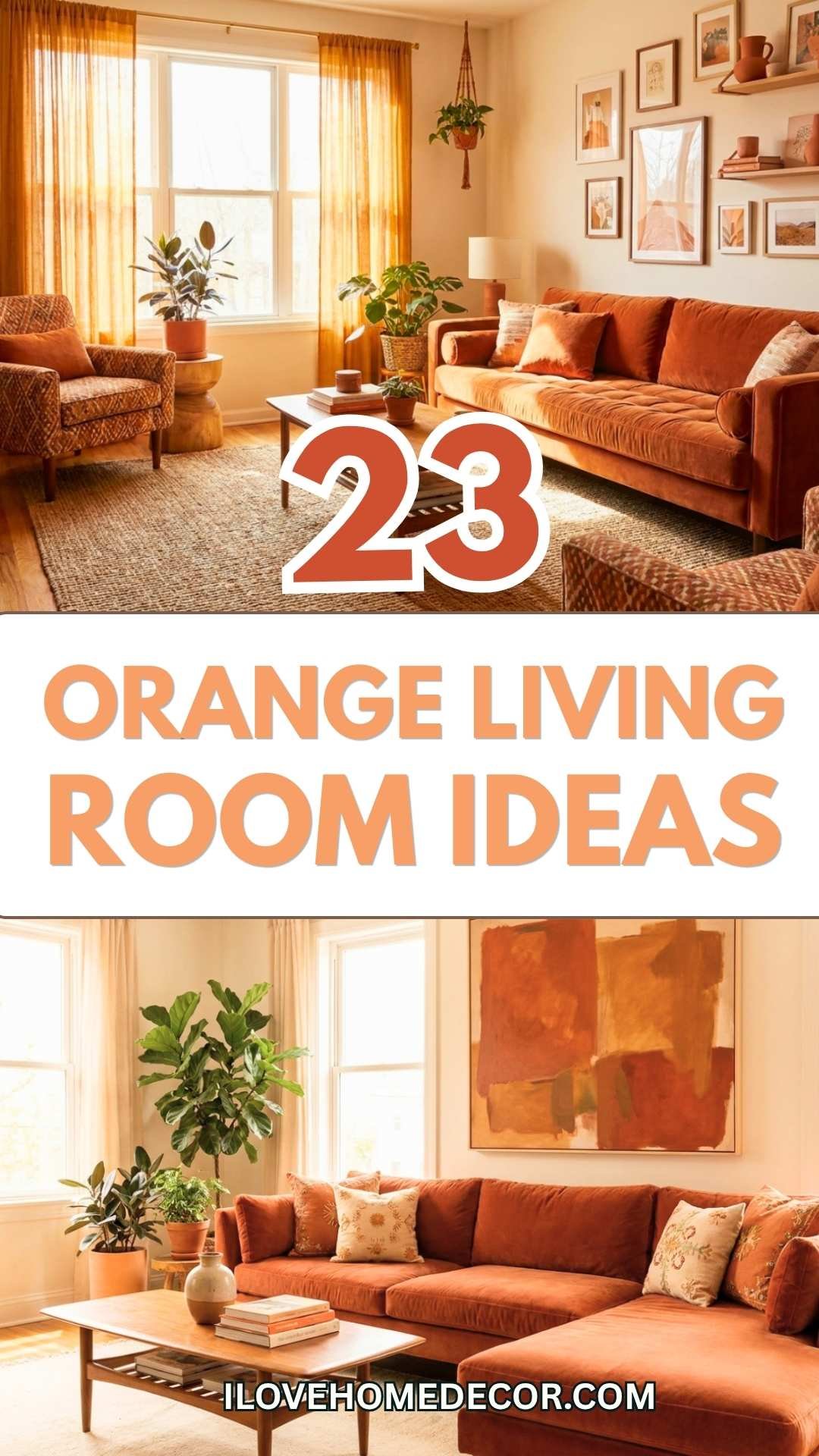
You can try a velvet sofa, a single rug, a painted wall, or just a few pillows and lamps. Orange goes well with neutrals, wood, brass, and stone, so it is easier to use than most people expect.
1. Burnt Orange Velvet Sofa With Walnut Coffee Table

A burnt orange velvet sofa brings instant warmth, and the fabric keeps it interesting. Pair it with a walnut coffee table for a rich look that feels stylish but not fussy.
This setup works well if your walls are light and your decor is simple. Cream pillows and a sculptural lamp are enough, since the sofa already stands out.
2. Terracotta Limewash Accent Wall Behind A Cream Linen Sofa

Terracotta limewash adds movement and depth, so the wall feels soft instead of flat. A cream linen sofa calms the room and gives it an airy base.
The textured finish makes orange look earthy and inviting. It is much easier on the eyes than a bright painted wall.
3. Cognac Leather Armchair Paired With A Rust Area Rug

Cognac leather brings warm orange-brown tones, so it feels natural with a rust rug. Together, they make a corner feel finished, even if the rest of the room is neutral.
This is a good choice if you want orange but do not want a big statement piece. Add a throw blanket and a floor lamp to complete the look.
4. Amber Glass Table Lamps On A Black Console Table

Amber glass gives a gentle orange glow. On a black console table, the color looks sharp and modern.
This works well near a sofa or behind seating for mood lighting. The glass catches the light in the evening and adds a cozy touch.
5. Orange And Ochre Moroccan Rug In A Neutral Living Room

A Moroccan rug is an easy way to add orange without painting. The mix of ochre, rust, and faded orange brings pattern and warmth.
In a neutral living room, the rug becomes the anchor. Keep the furniture light and let the rug add color and interest.
6. Rust Throw Pillows On An Ivory Sectional

Rust pillows are the easiest way to try orange at home. On an ivory sectional, they add just enough color to warm up the room.
Mix in a pillow or two with texture, like boucle or linen, for a more layered look. If you are unsure about orange, this is a gentle way to start.
7. Sherwin-Williams Cavern Clay Walls With Natural Oak Furniture

Cavern Clay is a soft earthy orange that feels grounded, not flashy. Natural oak furniture keeps things balanced and brings out the warmth in the paint.
Add woven textures and matte finishes so the room stays relaxed. This pairing helps your living room feel cozy day or night.
8. CB2 Orange Boucle Accent Chair In A Minimalist Layout

An orange boucle chair brings color and texture together in one spot. In a minimalist room, it stands out without needing you to redo the whole space.
This is a great pick for apartments or small rooms because it does not take up much space. Keep the rest of the room calm, and the chair will shine.
9. Vintage Hermès-Orange Art Print In A Gallery Wall

A bright orange art print can wake up a gallery wall. It gives the whole group a clear center and makes the wall feel more planned.
You do not need every piece to match. Connect the orange print to a vase or pillow, and the color will feel like it belongs.
10. Terracotta Ceramic Vases On A Travertine Coffee Table

Terracotta vases are a small touch with a big effect. On travertine, they look earthy and elegant without making a fuss.
Use a few shapes instead of matching everything. This keeps your coffee table looking natural and relaxed.
11. Rust And Olive Color Palette With Brass Lighting

Rust and olive are a classic pair that go well together. Brass lighting adds a warm shine and ties the colors together.
This palette is great if you like rich color but want the space to feel grown-up. Add wood and a few plants for a cozy, layered room.
12. Mid-Century Orange Tulip Chair Beside A Teak Bookcase

A mid-century tulip chair brings a clean, retro shape that makes orange feel playful. Next to a teak bookcase, the look feels smart and a bit nostalgic.
This works well in a reading corner or along a spare wall. You get color, style, and a useful seat all in one.
13. Orange Roman Shades Framing Large Living Room Windows

Orange Roman shades give you color that looks neat and polished. Around big windows, they act like a frame and help the room feel finished.
Pick a terracotta or soft apricot shade if you want a gentle look. In daylight, these shades can glow without taking over the room.
14. West Elm Auburn Curtains With White Walls

Auburn curtains against white walls create a crisp, welcoming contrast. The curtains bring in orange, while the white walls keep things bright.
This is a good choice if you want a seasonal feel without going overboard. Soft drapes help the room stay relaxed and comfortable.
15. Adobe-Inspired Fireplace With Clay Tile Surround

A clay tile fireplace surround gives your living room a strong focal point. The adobe look brings warmth, even when the fire is off.
Keep nearby furniture simple so the fireplace stands out. A wood coffee table and a soft neutral sofa let the colors feel calm.
16. Orange Striped Ottoman In A Coastal Living Room

An orange striped ottoman gives a coastal room extra energy without losing the breezy feel. The stripes add movement, and the orange keeps the palette cheerful.
This works with sandy neutrals, pale woods, and plenty of natural light. It is the kind of piece that makes the room feel more playful.
17. Rust Plaid Wool Throw Over A Charcoal Sofa

A rust plaid throw is a simple way to add orange for colder months. Draped over a charcoal sofa, it adds color, softness, and a bit of texture.
The plaid pattern keeps things interesting. If your sofa is dark and your room needs warmth, this is a quick fix.
18. Apricot Paint On Built-In Shelves With Matte Black Decor

Apricot shelves bring a cheerful warmth that still feels light. Matte black decor gives the color a modern edge.
If you have built-ins, this is a smart way to make them feel special. Books, ceramics, and a few black pieces are enough to style the shelves.
19. Orange Floral Schumacher Wallpaper In A Traditional Sitting Room

Orange floral wallpaper can make a traditional sitting room lively and pretty. The pattern brings in color without needing much extra decor.
Keep the furniture classic so the wallpaper feels like part of the story. Let the walls stand out, and the space gets personality right away.
20. HAY Quilton Sofa In Warm Orange For A Contemporary Space

A warm orange sofa can set the mood in a modern room. The clean lines keep it fresh, while the color brings energy to a simple setup.
Pair it with pale wood and a low table. Add a few plants for balance.
The sofa takes center stage. The rest of the room can stay relaxed and simple.
21. Target Threshold Terracotta Accent Pillows For A Budget Refresh

Terracotta pillows are a quick, budget-friendly way to warm up a tired space. They are easy to swap out, which is great for a seasonal update.
Mix them with cream, tan, or soft gray furniture. This helps the color feel balanced and calm.
A few well-placed pillows can give your sofa a fresh look. Small changes like this can make a big difference.
22. Orange Books And Decorative Objects Styled On Open Shelving

Orange books and small objects are a fun way to repeat color around the room. On open shelves, they add little pops of warmth that feel thoughtful.
Try grouping orange pieces with neutral items. This makes the color stand out even more.
A little repetition across shelves can tie the whole room together. It’s a quiet but clever trick.
23. Rust Ceiling Paint For A Cozy, Cocooned Living Room

A rust ceiling is bold, and that’s what makes it special. It wraps the room in color and creates a cozy feeling.
Keep the walls light if you want the ceiling to pop. The right lighting can make the whole room feel warm and welcoming.
How To Choose The Right Shade Of Orange

Burnt Orange Vs. Terracotta Vs. Apricot
Burnt orange is deep and rich. Terracotta is earthy, while apricot feels softer and lighter.
If your room needs drama, go for burnt orange. Terracotta is nice when you want warmth without too much boldness.
Apricot works best when you want just a hint of orange. It’s easy to live with if your room already has a lot happening.
Warm Light Vs. Cool Light Rooms
Warm light makes orange feel richer and cozier. Cool light can make orange look sharper or a bit flat.
If your room faces north, test paint samples at different times of day. Orange changes a lot, and you want a shade that still looks good in the evening.
When To Go Bold And When To Stay Subtle
Go bold if you want orange to be the main focus, like on a sofa, wall, or curtain. Stay subtle if orange is just an accent, like in pillows, vases, or art.
If your room already has strong patterns or dark colors, use orange in small amounts. If the space feels plain, one bold orange piece can wake it up.
Best Colors And Materials To Pair With Orange

Neutrals That Calm Orange Down
Cream, ivory, beige, taupe, and soft gray help orange feel more relaxed. These colors give your eyes a place to rest.
If you want orange to look polished, use neutrals in the biggest pieces. This makes the orange feel like a planned choice.
Wood Tones, Metals, And Stone Finishes
Walnut, oak, teak, brass, and travertine work well with orange. They all bring out the warmth in the color.
Matte finishes make orange feel softer. Polished metal can make it look sharper.
Mixing a few textures keeps the room interesting. It helps the space feel natural and inviting.
Accent Colors That Make Orange Look Sophisticated
Olive green, deep navy, charcoal, and muted blue all help orange appear more mature. These colors add contrast but do not fight for attention.
If you want a room that feels cozy and balanced, use orange for warmth. Pair it with one of these darker shades for a classic look.
This mix feels stylish and calm. It avoids looking too bold or playful.


Hello! I’m Basana Saha, the Founder and Editor of iLoveHomeDecor. Through this blog, I share my passion for home decoration and interior styling. As someone who believes every space has untapped potential, I explore creative ways to make homes both beautiful and welcoming. My journey began with transforming my own living space, which sparked a deep interest in interior design and decoration. Through extensive research, countless hours of design exploration, and collaboration with industry experts, I bring fresh perspectives and practical ideas to help you create spaces you’ll love. Whether you’re a design enthusiast or just starting your home decoration journey, iLoveHomeDecor offers inspiration, tips, and solutions for every budget.